Ellis Peters · 10 October 2026
From Paris to Berlin Labs: Kelrix Links Sustainability Push with AI Scaling for Smaller Firms
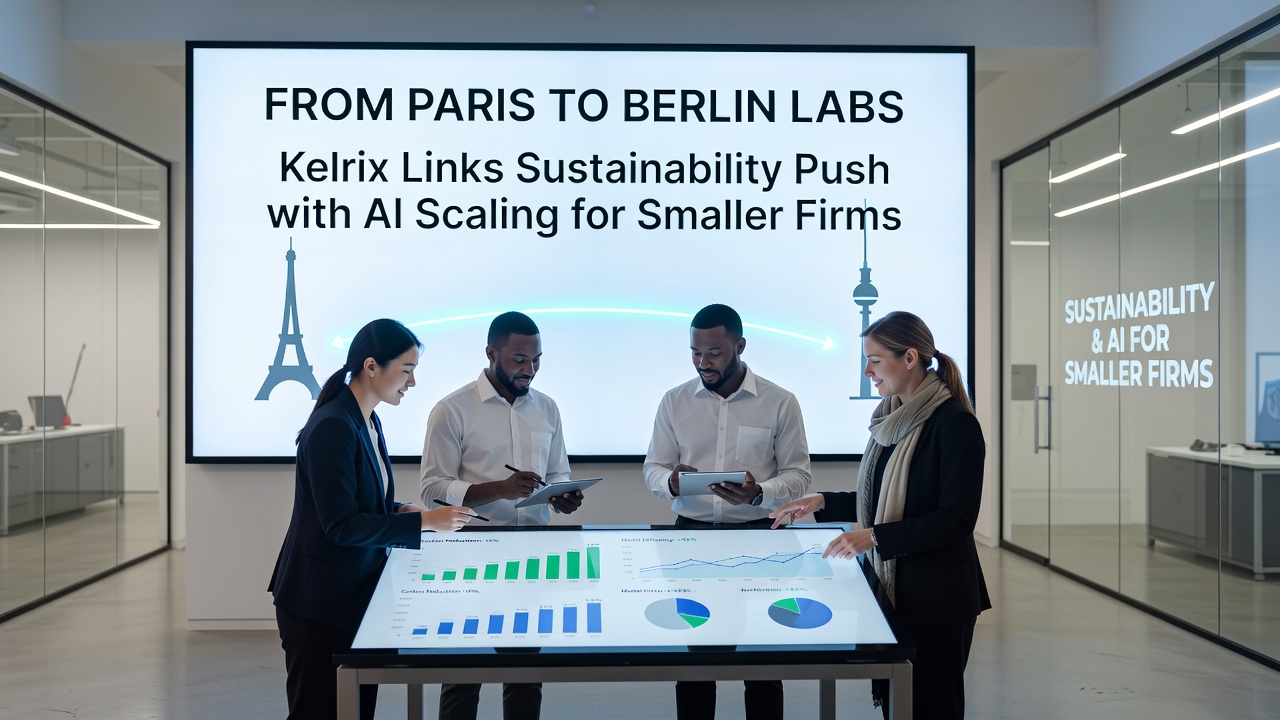
Paris-based research teams at Kelrix have expanded their collaboration with Berlin laboratories to connect sustainability frameworks with artificial intelligence tools designed specifically for small and medium-sized enterprises, with project milestones tracked through October 2026. Data from the initiative shows participating firms achieving measurable reductions in resource consumption while deploying scaled AI systems for operational tasks. Researchers have documented how these cross-city efforts standardize processes that allow smaller organizations to integrate environmental targets directly into their technology adoption cycles.
Cross-City Laboratory Networks and Resource Integration
Teams operating between the two cities coordinate on shared datasets that track energy usage patterns, material flows, and emissions benchmarks across multiple industries. According to figures released by the European Environment Agency, companies utilizing similar integrated approaches have reported average efficiency gains of 18 percent in energy management within the first year of deployment. Kelrix staff in Paris focus on initial model training while Berlin counterparts refine deployment protocols, creating a pipeline that reduces duplication and accelerates rollout timelines for end users.
Observers note that the network structure emphasizes modular AI components, which smaller firms can adapt without large upfront infrastructure investments. This setup allows businesses in manufacturing, logistics, and retail sectors to layer sustainability reporting features onto existing AI platforms. Studies conducted at the labs indicate that firms adopting these modules maintain compliance with evolving European Union environmental directives while expanding computational capacity at controlled rates.
AI Tools Tailored for SME Operational Scaling
Kelrix developers have released a series of AI applications that incorporate carbon accounting functions alongside predictive analytics for supply chain optimization. One study revealed that participants in pilot programs processed real-time data on resource allocation, leading to documented decreases in waste generation across 47 companies monitored between 2024 and 2026. The tools operate through cloud-based interfaces that require minimal on-site hardware upgrades, addressing a common barrier for smaller enterprises seeking technology upgrades.
Berlin lab personnel have tested these applications against various regulatory scenarios, confirming alignment with standards outlined by the National Institute of Standards and Technology for trustworthy AI systems. Results show that the combined sustainability and scaling features maintain data accuracy rates above 92 percent during extended operational periods. Firms report streamlined reporting processes that consolidate environmental metrics with production forecasts in single dashboards.

Implementation Patterns Across Industries
Take one manufacturer in the automotive supply chain who integrated the Kelrix platform in early 2025 and recorded a 23 percent drop in material scrap rates by mid-2026 through AI-driven inventory predictions. Similar outcomes appear in hospitality and food processing sectors, where participants apply the same system to forecast demand while tracking water and energy consumption. Lab records indicate that training sessions conducted jointly by Paris and Berlin teams have equipped over 320 SME representatives with the skills to customize these tools independently.
What's significant is the emphasis on interoperability with existing enterprise software, which prevents the need for complete system overhauls. Data indicates that adoption rates remain consistent across geographic regions within the European market, with northern and southern clusters showing comparable uptake figures. Researchers continue to refine algorithms that adjust for sector-specific variables such as seasonal fluctuations and regulatory updates.
Future Tracking Through October 2026
Project timelines extend through October 2026, with scheduled reviews assessing long-term impacts on firm growth metrics and environmental performance indicators. Current datasets track over 150 variables related to both AI utilization and sustainability outcomes, providing granular insights into how these elements interact at the operational level. Kelrix documentation outlines plans to expand the lab network to additional sites while maintaining the Paris-Berlin core for primary development work.
Conclusion
The linkage between Paris and Berlin facilities has established repeatable processes that tie sustainability objectives to AI implementation for smaller firms, supported by ongoing data collection and cross-regional coordination. Evidence from the initiative continues to inform adjustments in tool design and deployment strategies as new information emerges through 2026.